Before our rollers, pulleys, or other components operate under extreme conditions, we put them to the test to ensure that what works on paper performs just as reliably in the field.
At ULMA CONVEYOR COMPONENTS, our Laboratory & R&D is where we reduce uncertainty and validate technical decisions before they reach the field.
We validate:
New developments
Design modifications
Specific customer requirements
Control plans defined within our quality management system
What We Test
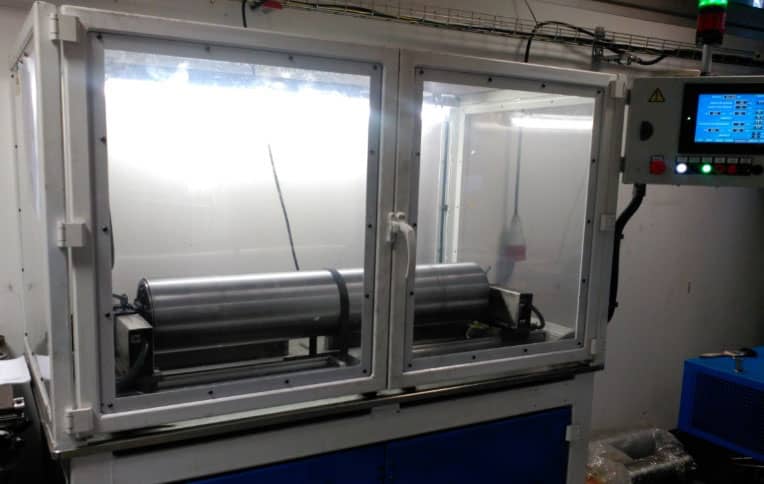
We reproduce heavy-duty mining scenarios and analyze how components respond under real operating conditions:
Rotational Resistance
To detect abnormal increases in effort that may anticipate wear or seizure.
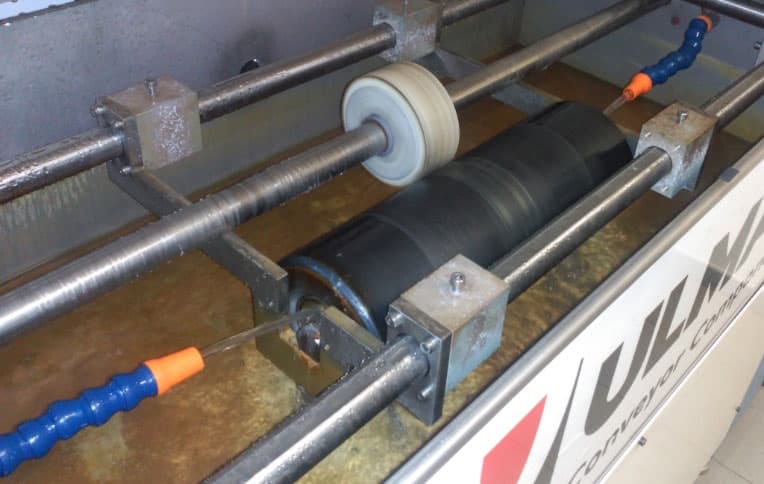
Water and Moisture Performance
To verify long-term bearing protection when rollers operate in wet conditions or in environments where water is constantly present.
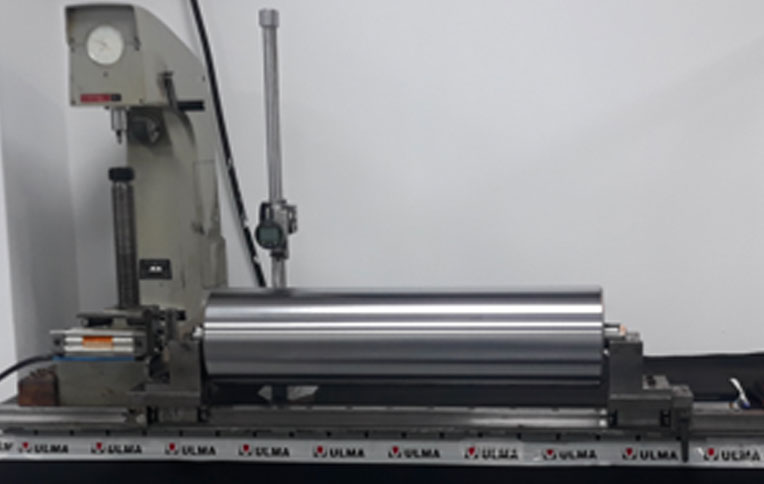
Dimensional Control
Geometry, eccentricity (TIR), and axial displacement — because small deviations can have major operational consequences.
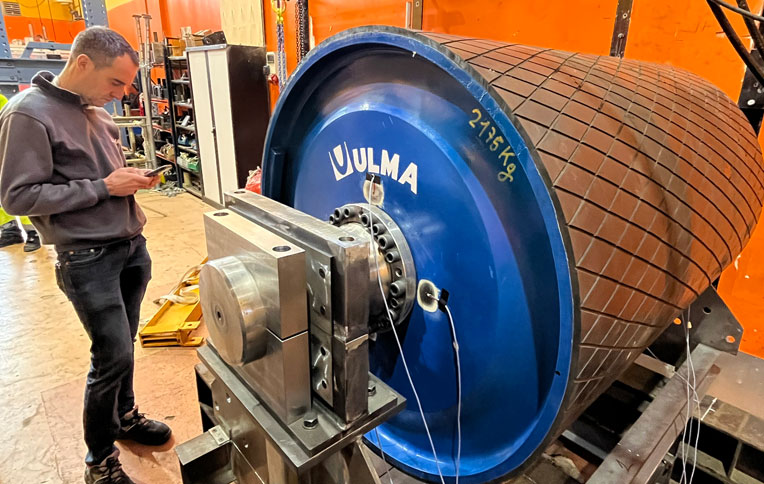
Pulley Load Testing
To validate the pulley’s structural rigidity under real working conditions.
Protection Against Dust and Fine Particles
To assess the sealing system’s capacity to protect against contaminants under continuous operation
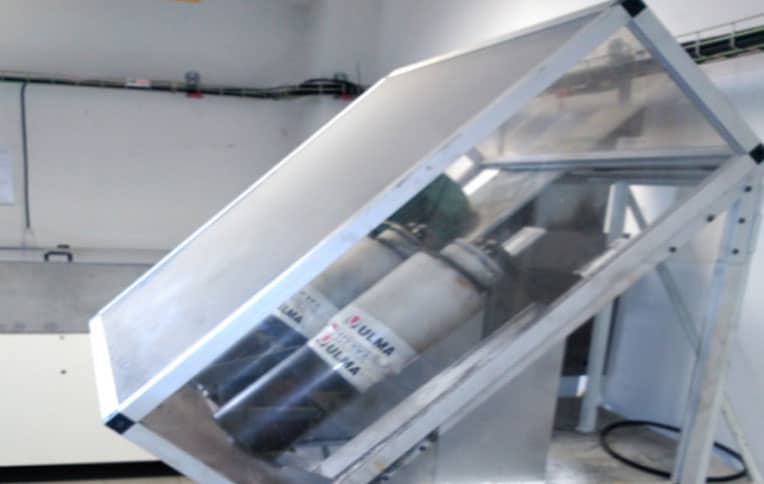
Dust sealing verification
Conditions: 72 hours rotating at 600 rpm Rollers inclined at 45° inside a housing containing fine-particle contaminant material.
Result: The protection barriers of the ULMA Sealing System prevent particle ingress and keep the bearing protected.
Structural Strength and Load Capacity
To analyze how the roller performs under load and mechanical stress during operation.
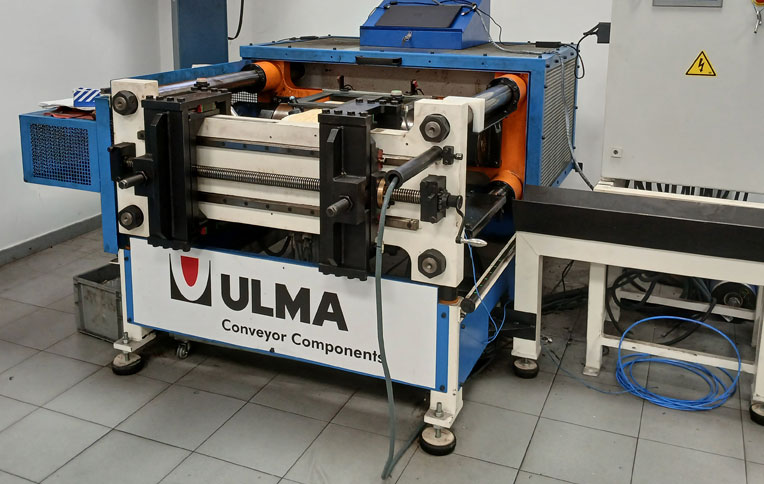
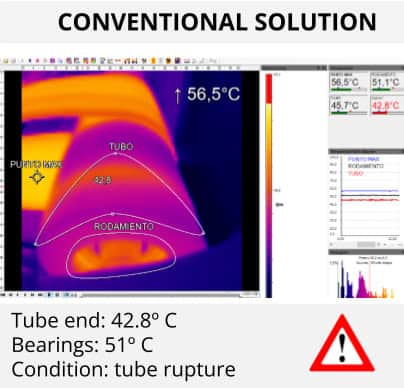
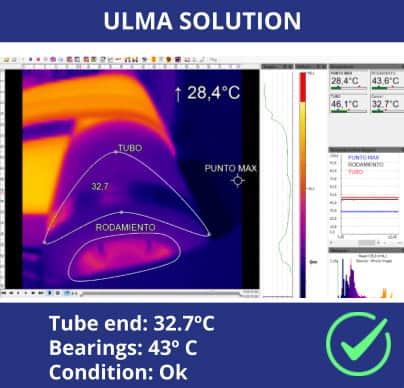
Structural test: ULMA Composite roller vs. conventional solution
Conditions:
Load: 1,300 kg
Speed: 500 rpm
Result:
Compared with the conventional solution, the ULMA Composite roller maintains the integrity of the assembly and operates at lower bearing temperatures.
To validate the pulley’s structural rigidity under real working conditions
Observing these behaviors allows us to fine-tune designs, materials, and geometries with a clear objective: preventing a minor misalignment from turning into unplanned downtime.
The goal is not only to extend component service life. We aim to facilitate maintenance, reduce unexpected interventions, and provide greater control to those managing day-to-day operations.
Equipment and Control
We operate dedicated test benches for load, dynamic stress, and sealing performance, as well as certified dimensional control and measurement systems.
All inspection equipment used complies with the requirements of our quality management system certified under UNE-EN ISO 9001 and is periodically verified with full traceability to international standards.